
1. What happened
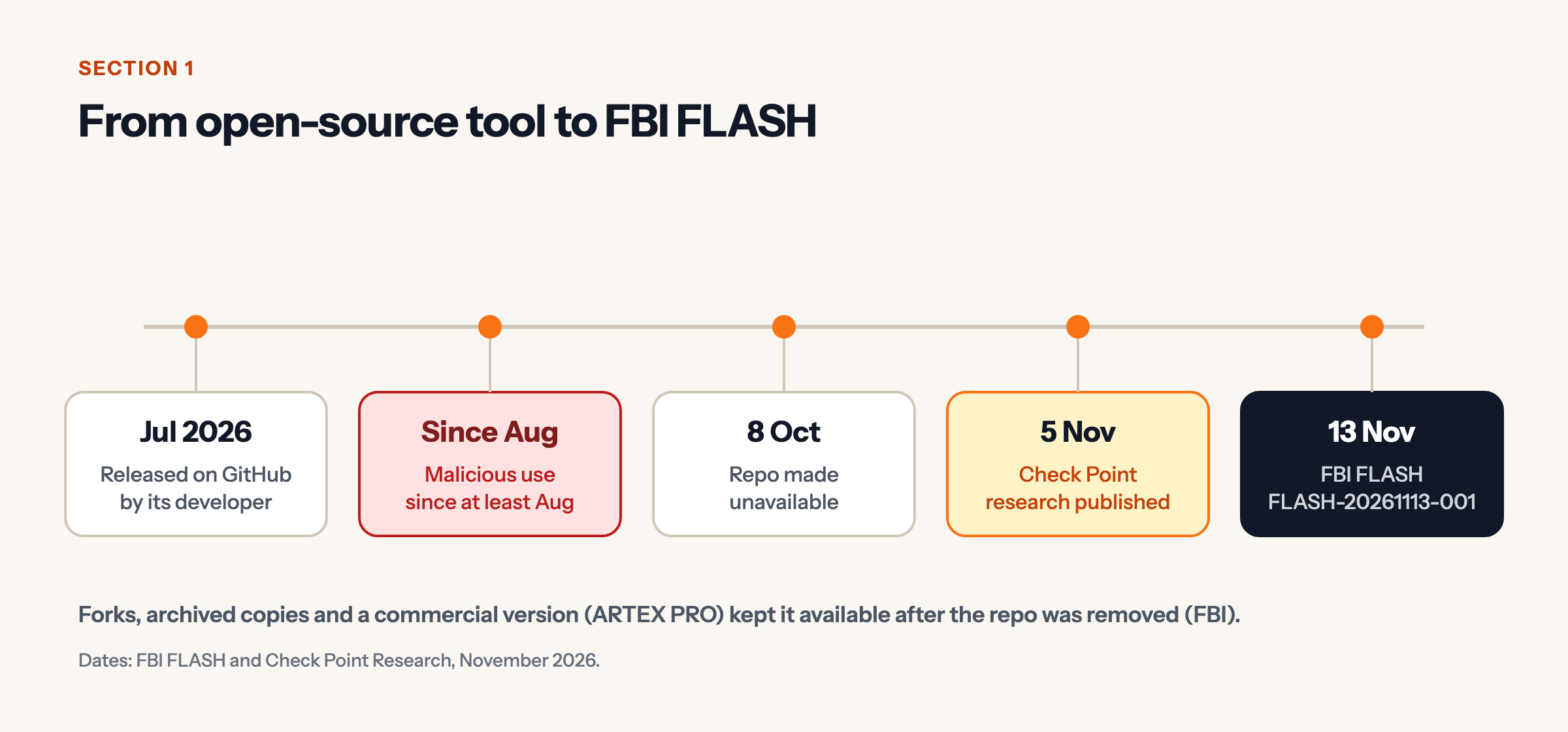
On 13 November 2026 the FBI published FLASH-20261113-001 about ARTEX, an open-source, LLM-driven penetration-testing framework. The FBI says attackers have used it since at least August 2026 to automate steps from reconnaissance to data exfiltration. It also reports that some intrusions went from initial targeting to privileged access in under three hours. Check Point Research had published its own analysis of criminal use on 5 November.
2. Why it matters to builders
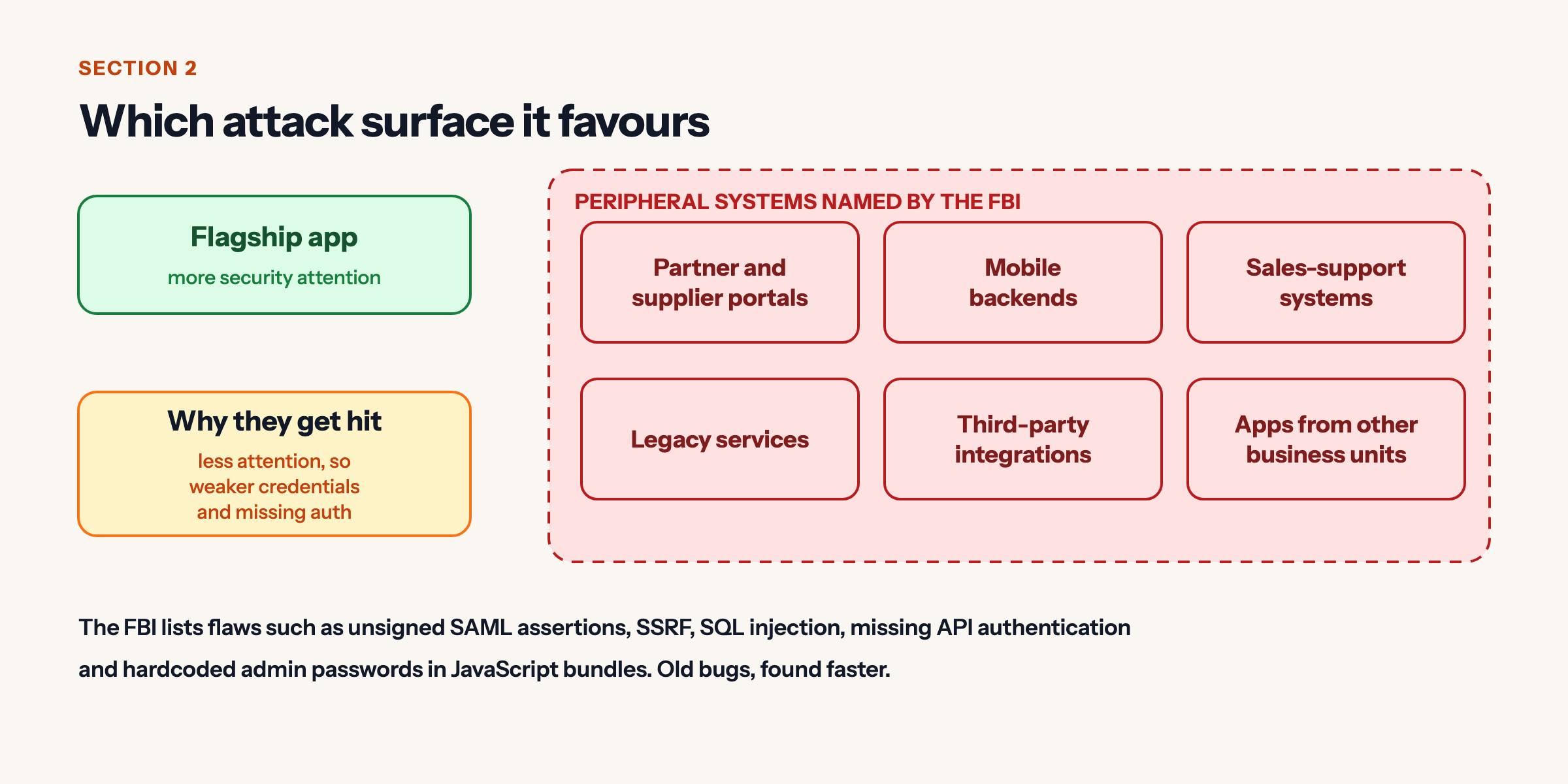
The FBI says ARTEX is good at overlooked systems: partner portals, mobile backends, sales-support tools and legacy services. The flaws it lists are not new: unsigned SAML assertions, SSRF, SQL injection, missing API authentication, hardcoded admin passwords in JavaScript bundles. The change is speed and scale. The FBI says small groups can run several campaigns at once.
3. How it works
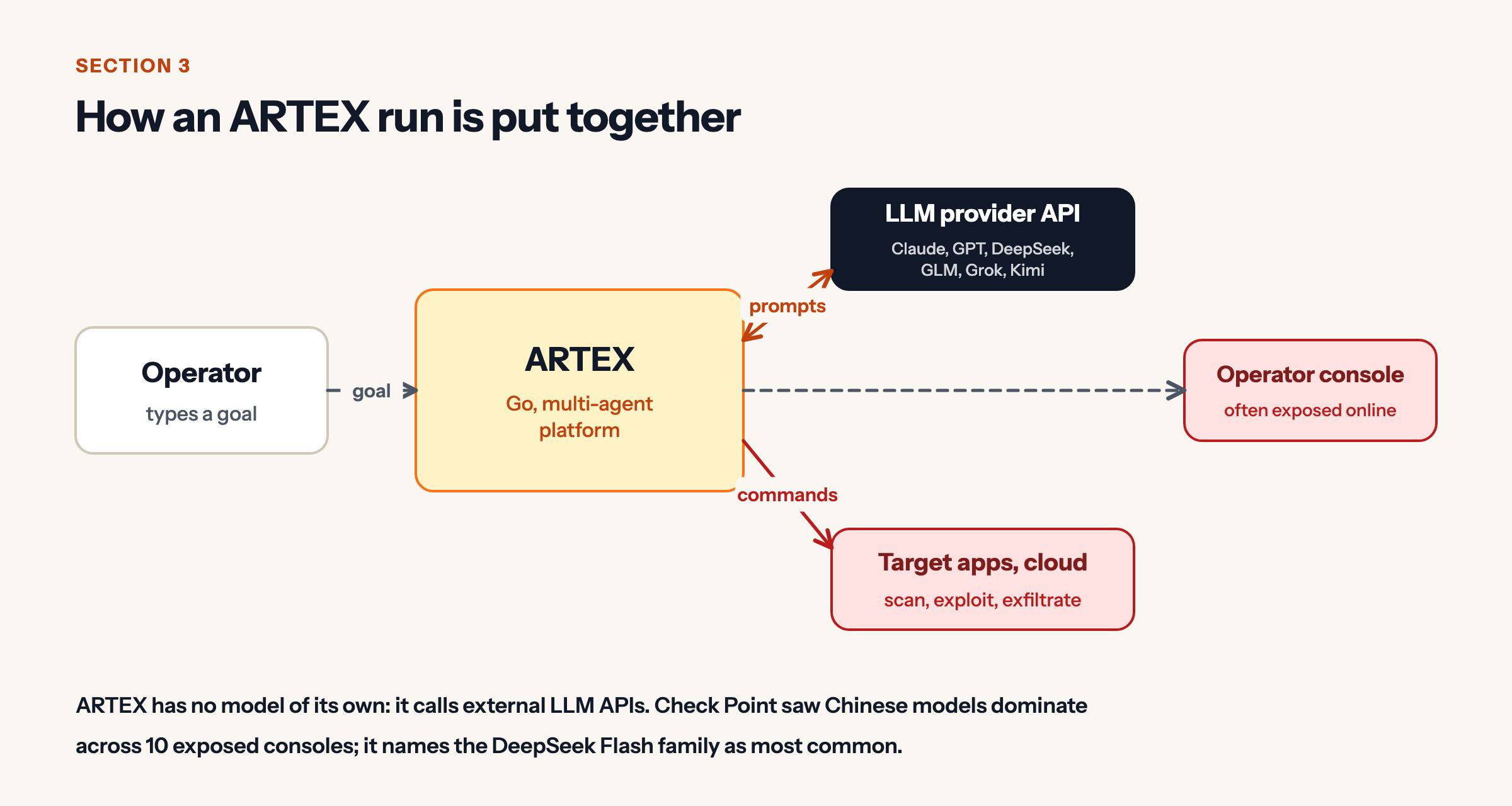
ARTEX is a multi-agent platform written in Go. An operator describes a goal in natural language, and agents turn it into commands. It has no model of its own and calls external LLM providers. The FBI lists Claude, GPT, DeepSeek, GLM, Grok and Kimi. Check Point examined 10 misconfigured operator consoles and reports that most attacks ran autonomously after the goal was set. It also reports that Chinese models dominated, with the DeepSeek Flash family most common. In its account, guardrails triggered once, when an operator used an Anthropic model, and the operator then switched models.
4. What to do
The FBI recommendations, in short:
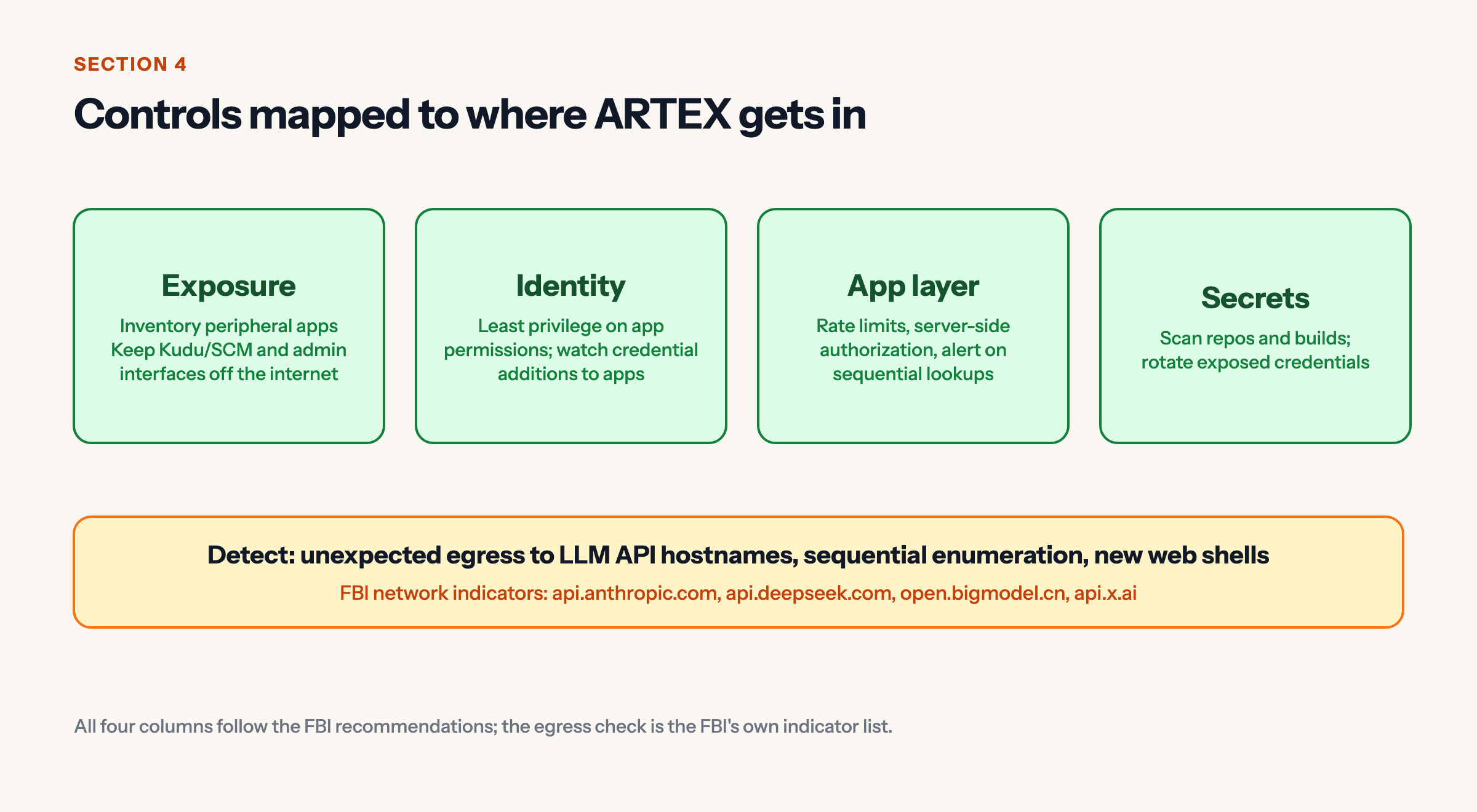
- Shrink exposure. Inventory every internet-facing app, including peripheral ones. Keep cloud admin, Kudu/SCM and other management interfaces on trusted networks.
- Tighten identity. Apply least privilege to application permissions and watch for credentials added to apps.
- Guard the app layer. Rate limits, server-side authorization, no verbose errors to anonymous users, and alerts on sequential record lookups.
- Hunt secrets. Scan repositories, images and pipelines for embedded secrets and rotate any you find.
For detection, the FLASH lists outbound calls to LLM API hosts as an indicator. This one-liner is illustrative and untested; adapt it to your log format:
# illustrative: count egress log lines per LLM API host named in the FLASH
grep -E 'api\.anthropic\.com|api\.deepseek\.com|open\.bigmodel\.cn|api\.x\.ai' egress.log | awk '{print $1}' | sort | uniq -c
Many legitimate tools call these hosts, so treat a hit as a lead, not proof. The FBI itself says to vet indicators before acting.
5. What is still unknown, and takeaways
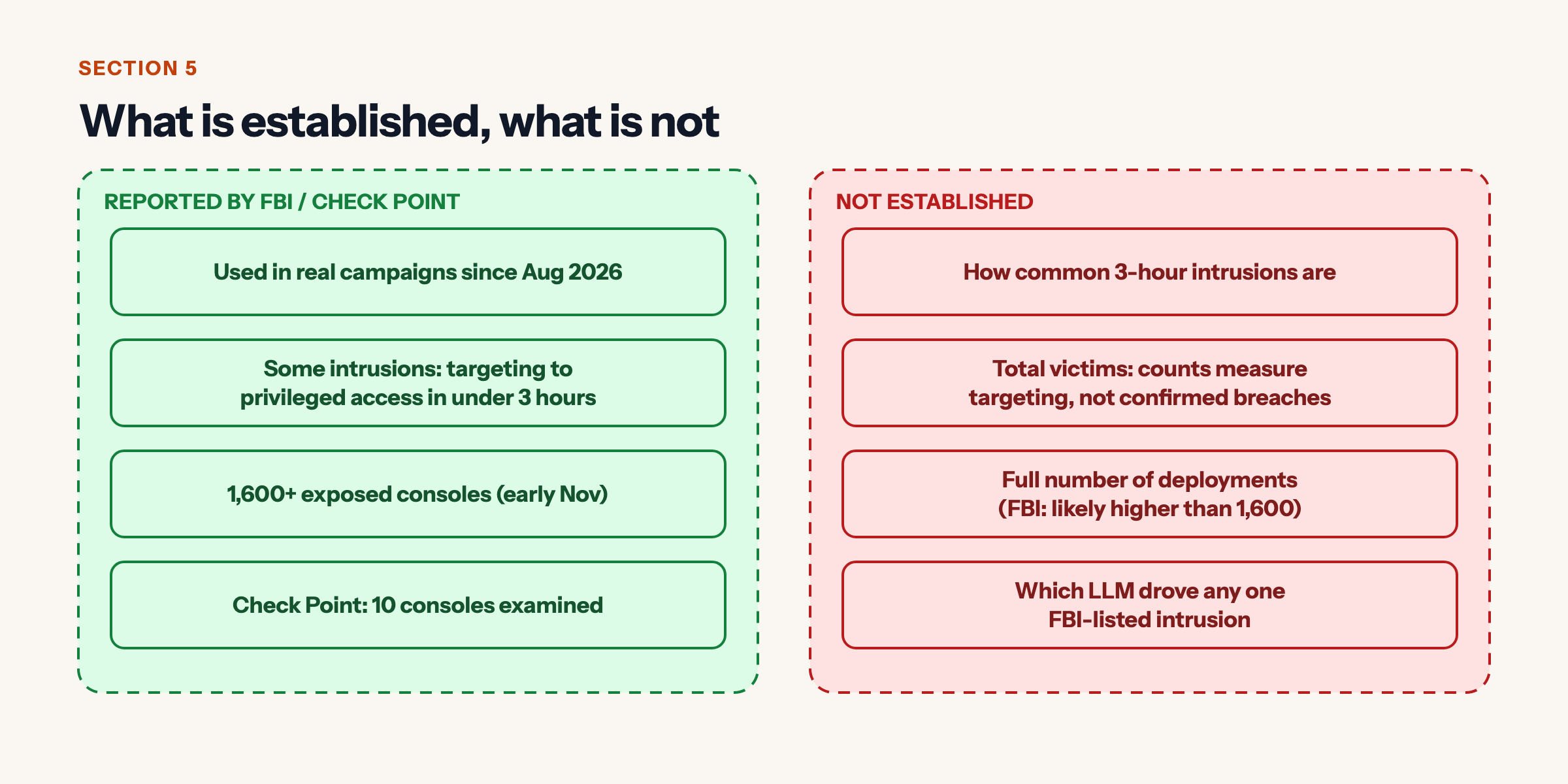
The FLASH says the 1,600+ exposed consoles are a floor, not a total. The “under three hours” figure describes some intrusions, not a typical one, and the 2,250-tenant ConnectWise figure measures downstream access, not confirmed damage. We do not know how widely the forks are deployed.
Takeaways (our opinion): attackers are getting a cheap labour multiplier, not a new exploit class, so basic hygiene on forgotten apps pays off. Assume anything internet-facing is probed continuously.
Sources
- FBI, FLASH-20261113-001, “Threat Overview of ARTEX Autonomous Penetration Testing Framework”, 13 Nov 2026: ic3.gov/CSA/2026/261113.pdf
- Check Point Research, “Hacking on Autopilot: Inside ARTEX Cybercrime Campaigns”, 5 Nov 2026: research.checkpoint.com
- Cyber Security News coverage of the FLASH, 14 Nov 2026: cybersecuritynews.com


